
Tag Archives: Personal

Anything personal that might not necessarily be tech related

Will AI Replace Mid-Level Engineers by 2025? Not So Fast, Mark Zuckerberg

It’s hard to ignore the growing buzz around artificial intelligence (AI) and its potential impact on various industries. Recently, Mark Zuckerberg predicted on Joe Rogan’s podcast that AI could replace mid-level engineers by 2025. While it’s a compelling narrative, it misses the mark for several reasons. Let’s unpack why this prediction is more hype than reality.

Companies Aren’t Fully Using Their Own AI Tools

Take Salesforce as a prime example. The company has heavily promoted its AI-powered sales agents, touting them as the future of sales. Yet, if you look at Salesforce’s own career page, approximately 75% of their job postings (775 out of 1035 as of Jan 16, 2025) are for sales roles. If their AI tools were truly ready to replace human salespeople, why wouldn’t Salesforce “dogfood” their own product, slash sales jobs, and reap massive savings?

Dogfooding Gone Wrong

This disconnect isn’t unique to Salesforce. Many companies pushing AI solutions still rely heavily on human expertise to deliver the results they promise. It’s one thing to sell the dream of AI-driven automation, but it’s another to trust your core operations to it. If organizations like Salesforce, which stand to gain the most from successful AI adoption, aren’t betting the farm on their own tools, why should we believe AI will displace engineers en masse at other companies?

AI-Generated Code Still Needs Maintenance

Even if AI can write functional code, that doesn’t eliminate the need for mid-level engineers. All code, no matter how well-written, eventually requires updates. Security vulnerabilities need patching, APIs evolve, dependencies get deprecated, and business requirements change. Who’s going to handle these inevitable maintenance tasks? AI might be able to assist, but it can’t completely replace the nuanced understanding of a system that a human engineer provides.

Consider the metaphor of AI as a power tool for software development. It can make some tasks faster and easier, but someone still needs to wield the tool, know how to use it safely, and fix the mess when something goes wrong. Far from making engineers obsolete, AI tools are likely to amplify their productivity—and perhaps even increase demand for engineers who can effectively integrate these tools into their workflows.
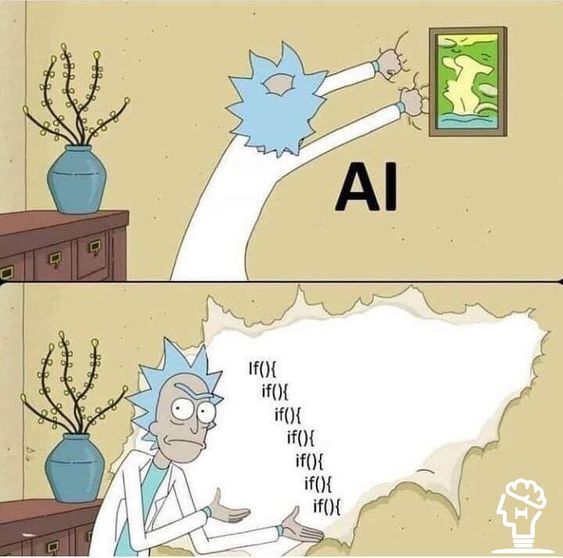
AI Generated Code

If companies like Meta actually moved forward with replacing most of their mid-level engineers, they’d quickly find themselves in a “foot-and-gun” scenario. Without a robust team of engineers to maintain and adapt AI-generated code, systems would break down, product development would stall, and customer trust would erode. It’s a short-sighted strategy that prioritizes immediate cost savings over long-term resilience.

Selling the Promise of AI Is in Their Interest

It’s no secret that tech giants have a vested interest in promoting AI as the next big thing. AI and machine learning are lucrative business lines, and hyping up their potential is a great way to attract investment, sell products, and capture headlines. By framing AI as a technology capable of replacing entire swaths of the workforce, these companies generate excitement and urgency around adopting their solutions.

Heck, I am an AI/ML Engineer… I am in the space promoting the same thing, but my views on AI/ML is that they are HIGHLY strategic tools to be used by people. Replacing mid-level engineers isn’t just a technical challenge; it’s a strategic one. Engineering teams don’t just write code—they collaborate, solve complex problems, and adapt systems to changing business needs. These human-centric tasks are not easily outsourced to AI, no matter how advanced it becomes.

When did killers get popular?

At the end of the day, humans consume the products that these companies produce. Until that changes, people will make the decision on what to buy and companies need to persuade those people to choose to buy their products. AI/ML systems don’t understand why things go viral, why we collectively like what we do, and why things like Hawk Tuah or Luigi Mangione captured our collective attention. Would AI have predicted that a good number of people would rally around someone killing another person? I think not.

The Full Stop Thought

AI is undoubtedly transforming how we work, and some jobs will inevitably be impacted. However, the idea that AI will replace most mid-level engineers at companies like Meta by 2025 is far-fetched. The reality is that AI tools are most effective as complements to human expertise, not replacements for it. Companies still need skilled engineers to maintain systems, adapt to changes, and ensure the quality of their products—and that’s not going to change anytime soon.

Here is the final thought… Currently, all AI systems today start with a user prompt. The keyword here is the user. Humans drive the direction of the work an AI system does because they aren’t self-aware of their environment. They don’t know what’s happening outside the digital world and the little box they live in. Until AI systems interfaces become a simple power switch without requiring a user prompt, these systems will need humans to direct what they produce. Period.

Pushing the Boundaries: My Experience at the Real Time Communication Conference at Illinois Institute of Technology

This was my first time at the RTC Conference at Illinois Institute of Technology in Chicago, and I was blown away by the caliber of talks at the event. They ranged from very academic and theoretical to extremely practical, capturing what is happening on the ground today in real-time communications. The mix of attendees was one of the most diverse I have ever seen, which included seasoned professionals in their respective fields to bright and inquisitive minds from IIT starting their careers in the workforce. I was fortunate to have some fantastic conversations while I was here, which I will get to at the end of this post, but this was a mind-opening experience that I am grateful to have received.

My journey to Chicago included presenting two sessions at the conference. The first was titled “Enhancing Real-Time WebRTC Conversation Understanding Using ChatGPT” and the second was “Edge Devices as Interactive Personal Assistants: Unleashing the Power of Generative AI Agents”. The talks each had very different goals in what they were trying to achieve. Based on the feedback and number of questions that I got afterward in the hallway, they were very well received. Attendees got a glimpse into some unique and thought-provoking possibilities they could take home to explore.

Enhancing Real-Time WebRTC Conversation Understanding Using ChatGPT

The upshot of this session was using Generative AI and Large Language Models (LLMs) to influence conversations in real time. The backdrop was using WebRTC as a protocol and platform to host our conversation, but in reality, any medium conducive to carrying a conversation would suffice. However, WebRTC provides an ideal environment as it’s an open standard, and every modern browser has the capability of supporting these voice/video communications.

Large Language Models and Conversation AIs, like ChatGPT, for the first time, have enabled us to influence the conversation on these platforms because they seamlessly participate in conversations and provide relevant contributions to the conversations being had. That’s the key to why this is a “thing” today. These AIs can be proactive in conversation and not just react to them.

If you are interested in learning more and seeing a really cool demo showcasing this in action, look at the recording above. The demo was definitely a crowd-pleaser since we got to highlight two powerful concepts: AI can retain the history of the conversation taking place and meaningfully participate to influence the simulated conversation for the demo.

All of these resources, links to articles mentioned, and open source projects used in this presentation can be found in the slides. There are also instructions on how to reproduce the demo within this talk.

Edge Devices as Interactive Personal Assistants: Unleashing the Power of Generative AI Agents

My second session focused on Autonomous AI Agents. This might be an unfamiliar topic to some, but we have all heard about them interacting in the real world. Unlike Siri and Alexa, which focus on a single transactional question and response, these are processes where AI models can create their own sub-tasks for problems that need more refinement or detail that a single answer might not be able to answer sufficiently. Without these Autonomous Agents, we typically achieve this refinement by asking the AI ourselves to drill down into a problem further. In this case, the autonomous agent process provides its own questions to seek out the details of the answer.

Since these LLMs are getting smarter and consume fewer resources than previous generations, they can live on IoT (Internet of Things) and Edge devices for the first time thanks to devices getting denser with more hardware capabilities and resources. This talk focuses on different architectures that can be used to land these Autonomous Agents on these IoT/Edge devices to focus on jobs that could run for many minutes to multiple days. The trade-off in these cases is answers with concentrated amounts of knowledge and a more thorough response versus the speed of the reply.

Take a look at the recording of the session above. There is also a demo at the end of this presentation that serves as a proof-of-concept to demonstrate what could be done with these Autonomous AI Agents using an open source project I wrote called Open Virtual Assistant. The demo highlights exercising the “memory” for these Agents (via their vector database) and how one might launch these agents within an IoT or Edge device.

Again all of these resources, links to articles mentioned, and open source projects used in this presentation can be found in the slides with instructions on reproducing the demo within this talk.

Looking Back… Personal Reflections

My most memorable parts of the conference were the conversations with other attendees. The last time I attended a conference was in the second half of 2022, just before ChatGPT blew up in the media. Oh, how times have changed! Besides a good number of the talks focusing on ChatGPT or AI in general, the buzz was definitely in the air and dominated most of the chatter in the hallways. I love tech talk, but I might love these philosophical, what-if, and future-predicting conversations even more.

One of the top questions I get asked frequently as someone who works in the AI/ML is, “Will humans lose our jobs to AI?”. I was also asked this while at the conference. My response is always yes and no. Yes, certain jobs will likely become obsolete… and No, there will always be jobs out there since we haven’t solved all the problems contained within our existence. There will always be jobs, but they might look completely different from what they are today.

An example I always like to give is the calculator and personal computer. When the calculator became mainstream, did all accounting or anything related to math disappear? The answer is definitely No. Society then created far more advanced “calculators” in the form of personal computers that do a bunch of repetitive tasks and naturally transitioned into automation. This is the automation of building cars, canning foods, or mass-producing clothing or shoes. This automation obsoleted people canning foods but created new jobs to develop and maintain these new automation systems.

Everyone recognizes the potential for Artificial Intelligence as the next significant disruptor to humanity. My advice is that just like the calculator or computer, it’s best to understand and know how to use these systems regardless of your field. Those who know how to leverage AI will outshine those who don’t. Finally, when there isn’t a need for a door-to-door encyclopedia salesperson, it’s best to objectively recognize the change in tides and learn something new to transition to. That’s my long-winded answer.

I had a great time at RTC Conference at IIT, and if you are a person like me who loves to learn new and exciting topics, technologies, and ideas, then this is a great place to expand your mind. I highly recommend going and hope I am lucky enough to be working on something compelling enough to share with others next year. Cheers!

Pushing the Boundaries: My Experience at the Real Time Communication Conference at Illinois Institute of Technology

This was my first time at the RTC Conference at Illinois Institute of Technology in Chicago, and I was blown away by the caliber of talks at the event. They ranged from very academic and theoretical to extremely practical, capturing what is happening on the ground today in real-time communications. The mix of attendees was one of the most diverse I have ever seen, which included seasoned professionals in their respective fields to bright and inquisitive minds from IIT starting their careers in the workforce. I was fortunate to have some fantastic conversations while I was here, which I will get to at the end of this post, but this was a mind-opening experience that I am grateful to have received.

RTC Conference at Illinois Institute of Technology

My journey to Chicago included presenting two sessions at the conference. The first was titled “Enhancing Real-Time WebRTC Conversation Understanding Using ChatGPT” and the second was “Edge Devices as Interactive Personal Assistants: Unleashing the Power of Generative AI Agents”. The talks each had very different goals in what they were trying to achieve. Based on the feedback and number of questions that I got afterward in the hallway, they were very well received. Attendees got a glimpse into some unique and thought-provoking possibilities they could take home to explore.

Enhancing Real-Time WebRTC Conversation Understanding Using ChatGPT

The upshot of this session was using Generative AI and Large Language Models (LLMs) to influence conversations in real time. The backdrop was using WebRTC as a protocol and platform to host our conversation, but in reality, any medium conducive to carrying a conversation would suffice. However, WebRTC provides an ideal environment as it’s an open standard, and every modern browser has the capability of supporting these voice/video communications.

Large Language Models and Conversation AIs, like ChatGPT, for the first time, have enabled us to influence the conversation on these platforms because they seamlessly participate in conversations and provide relevant contributions to the conversations being had. That’s the key to why this is a “thing” today. These AIs can be proactive in conversation and not just react to them.

If you are interested in learning more and seeing a really cool demo showcasing this in action, look at the recording above. The demo was definitely a crowd-pleaser since we got to highlight two powerful concepts: AI can retain the history of the conversation taking place and meaningfully participate to influence the simulated conversation for the demo.

All of these resources, links to articles mentioned, and open source projects used in this presentation can be found in the slides. There are also instructions on how to reproduce the demo within this talk.

Edge Devices as Interactive Personal Assistants: Unleashing the Power of Generative AI Agents

My second session focused on Autonomous AI Agents. This might be an unfamiliar topic to some, but we have all heard about them interacting in the real world. Unlike Siri and Alexa, which focus on a single transactional question and response, these are processes where AI models can create their own sub-tasks for problems that need more refinement or detail that a single answer might not be able to answer sufficiently. Without these Autonomous Agents, we typically achieve this refinement by asking the AI ourselves to drill down into a problem further. In this case, the autonomous agent process provides its own questions to seek out the details of the answer.

Since these LLMs are getting smarter and consume fewer resources than previous generations, they can live on IoT (Internet of Things) and Edge devices for the first time thanks to devices getting denser with more hardware capabilities and resources. This talk focuses on different architectures that can be used to land these Autonomous Agents on these IoT/Edge devices to focus on jobs that could run for many minutes to multiple days. The trade-off in these cases is answers with concentrated amounts of knowledge and a more thorough response versus the speed of the reply.

Take a look at the recording of the session above. There is also a demo at the end of this presentation that serves as a proof-of-concept to demonstrate what could be done with these Autonomous AI Agents using an open source project I wrote called Open Virtual Assistant. The demo highlights exercising the “memory” for these Agents (via their vector database) and how one might launch these agents within an IoT or Edge device.

Again all of these resources, links to articles mentioned, and open source projects used in this presentation can be found in the slides with instructions on reproducing the demo within this talk.

Looking Back… Personal Reflections

My most memorable parts of the conference were the conversations with other attendees. The last time I attended a conference was in the second half of 2022, just before ChatGPT blew up in the media. Oh, how times have changed! Besides a good number of the talks focusing on ChatGPT or AI in general, the buzz was definitely in the air and dominated most of the chatter in the hallways. I love tech talk, but I might love these philosophical, what-if, and future-predicting conversations even more.

One of the top questions I get asked frequently as someone who works in the AI/ML is, “Will humans lose our jobs to AI?”. I was also asked this while at the conference. My response is always yes and no. Yes, certain jobs will likely become obsolete… and No, there will always be jobs out there since we haven’t solved all the problems contained within our existence. There will always be jobs, but they might look completely different from what they are today.

An example I always like to give is the calculator and personal computer. When the calculator became mainstream, did all accounting or anything related to math disappear? The answer is definitely No. Society then created far more advanced “calculators” in the form of personal computers that do a bunch of repetitive tasks and naturally transitioned into automation. This is the automation of building cars, canning foods, or mass-producing clothing or shoes. This automation obsoleted people canning foods but created new jobs to develop and maintain these new automation systems.

Everyone recognizes the potential for Artificial Intelligence as the next significant disruptor to humanity. My advice is that just like the calculator or computer, it’s best to understand and know how to use these systems regardless of your field. Those who know how to leverage AI will outshine those who don’t. Finally, when there isn’t a need for a door-to-door encyclopedia salesperson, it’s best to objectively recognize the change in tides and learn something new to transition to. That’s my long-winded answer.

Meeting New Friends

I had a great time at RTC Conference at IIT, and if you are a person like me who loves to learn new and exciting topics, technologies, and ideas, then this is a great place to expand your mind. I highly recommend going and hope I am lucky enough to be working on something compelling enough to share with others next year. Cheers!